


MTl Locals features hidden on the website.
Chantelle Goslitski -
Changing the Narrative – Not the Child
From Personal Experience to Community Support: When Chantelle Goslitski first learned her eldest son was autistic, it became the moment that quietly changed the direction of her life. “The teacher came out after the first week of reception and said, ‘Your child’s autistic,’” she recalls. “I was offended at first — I didn’t understand what that meant. Fourteen years ago, I didn’t know anything about autism.” That moment sparked something deeper than curiosity. It sparked a determination to understand, advocate, and ultimately create something that would support families navigating the same journey. Chantelle was previously a high-performing area manager in London’s retail sector, working in training, staff development, and performance management at New Look. But after becoming a parent, her priorities shifted. Raising two neurodivergent children — her eldest is autistic and ADHD, and her younger son with ADHD — meant learning quickly about emotional regulation, educational systems, and the realities faced by families who often felt misunderstood by services designed to support them. Over time, her professional and personal worlds merged. Chantelle worked across the NHS, Norfolk County Council, educational settings, with therapeutic input, gaining insight into how mental health and SEND support systems function from both practitioner and service-user perspectives. Those experiences would later become the foundation of her own organisation. The Birth of Paradigm Neurodiversity: Paradigm Neurodiversity officially took shape last August, but the seeds were planted long before that. The concept emerged from frustration with the existing system and a desire to create a space where both children and their families could feel seen, understood, and supported. “After my NHS and NCC experience and my late diagnosis of being autistic and ADHD, I struggled to fit the mould and refused to accept tick-boxes and tokenism, I realised there must be a different way — a better way,” she explains. “So many times, when you ask for support from mental health services, the first thing they would ask is, ‘Your child is autistic.’ And immediately, everything else is reduced to that label. I wanted to give families space to be their authentic selves. That includes parents too.” Chantelle’s mission is clear: to create a safe, supportive environment for the whole family. Paradigm Neurodiversity works with children and young people under 25, as well as parent carers of neurodivergent children and young people. “For parents, it’s about having a space where they can be themselves, not just ‘mum’ or ‘dad.’ They can acknowledge how hard some days are without feeling judged,” she says. The mental health counselling services are unlimited and low-cost, emphasising accessibility and support at the point of need. For children, the approach blends creative art therapy with principles from Acceptance and Commitment Therapy (ACT). The goal is to help young people feel comfortable in their own skin, understand their emotions, and strengthen family relationships in a nurturing environment. Whether it’s a child needing support with social or emotional challenges, or a parent navigating grief and acceptance, Paradigm Neurodiversity seeks to provide the guidance that Chantelle herself wished she had. The Evolution of Paradigm Neurodiversity: Paradigm Neurodiversity began as an idea rooted in frustration with existing support pathways and grew into something far more ambitious. The organisation officially began taking shape last year before transitioning into full focus this year following a period of personal and professional change. After stepping away from previous roles, Chantelle dedicated more time to building Paradigm Neurodiversity into an independent service with its own identity and structure. In January this year, Paradigm Neurodiversity gained charity status, marking a significant milestone in its development. Shortly after, Chantelle transitioned to independent development after working with Sunbeams Community Hub, where she spent around five months gaining support, experience, and mentorship. “That time was really valuable,” she explains. “But moving forward with charity status meant I could build something that was fully aligned with my vision.” Paradigm Neurodiversity is now based at The Priory 1101 in Great Yarmouth, where Chantelle continues delivering mental health counselling and creative therapy sessions for children, young people, and parent carers. What makes the organisation particularly distinctive is its team structure. Every member of the team is neurodivergent themselves. “That shared lived experience is really important,” Chantelle says. “It creates a level of understanding that you can’t always train for. Families don’t have to explain themselves as much — there’s already a natural level of empathy and recognition.” Supporting the Whole Family: Building on its whole-family ethos, the therapeutic approach blends creative art therapy with Acceptance and Commitment Therapy principles, focusing on emotional understanding, self-identity, and relationship strengthening within families. Parent carers are offered unlimited low-cost counselling support. “There’s often grief involved for parents,” Chantelle explains. “Grief for expectations, for what they thought parenting might look like, and acceptance of both the child and themselves. I want to give them space to talk about that without judgement.” For children, sessions focus on helping them feel comfortable in their own identity rather than trying to change who they are. The emphasis is on emotional safety, self-expression, and confidence building, incorporating psychological flexibility. Sessions are structured but relaxed, lasting around 45 minutes. The environment is intentionally low-pressure — clients can choose where to sit, use fidget tools, remove shoes if they wish, and engage in therapy in a way that feels natural to them. Building the Next Stage of Support: Since moving into her own space, Chantelle has focused on building a sustainable, community-based service model. She currently supports seven counselling interns who are completing their clinical placement hours through Paradigm Neurodiversity. All of the counselling interns are neurodivergent themselves or have personal experience within SEND or mental health environments. Clinical software systems help streamline administration, allowing sessions to focus on therapeutic work rather than paperwork. “I wanted to remove as much of the administrative stress as possible,” she says. “Parents don’t have time for complicated forms, and my interns need to focus on learning and supporting clients.” The Everyday Work: Chantelle’s approach is grounded in meticulous planning. She uses clinical note software, provided free through Cliniko, to manage sessions efficiently. This ensures interns can focus on client interaction rather than administrative tasks, which are often a barrier in small practices. Feedback from both interns and families has been overwhelmingly positive, noting the professional structure and familiarity with SEND (Special Educational Needs and Disabilities) issues. Her vision for the future includes integrating Paradigm Neurodiversity into broader frameworks, such as Norfolk County Council’s therapy provision. This would allow families waiting for diagnostic assessments to access support pre-diagnosis — a gap Chantelle recognises all too well from her own experience. Future Plans and Community Growth: Chantelle’s vision for Paradigm Neurodiversity continues to expand. One of her upcoming goals is to introduce term-time parent wellbeing programmes, including: • A six-week parent wellbeing course delivered during weekday mornings • Parent and child wellbeing sessions on Saturday mornings during term time • Future development of a dads’ support group She is also planning to launch a knit-and-natter style community group running downstairs at The Priory 1101, likely on a fortnightly basis over the coming months. “These groups are about more than activities,” she explains. “They’re about connection. Parents need spaces where they can talk, relax, and realise they’re not alone.” Community Partnerships: Partnership work continues to play an important role in Paradigm Neurodiversity’s growth. Local community organisations and mentors have supported Chantelle’s journey, providing guidance around funding, networking, and service development. These partnerships have helped accelerate the organisation’s growth far faster than she initially expected. “Two months ago, this still felt like a dream,” she says. “Now it’s real, and it’s busy — but in a good way.” Life Outside Work: Outside of her professional work, Chantelle prioritises time with her family and personal wellbeing. Walking her two-year-old Cane Corso, Coco, is a key part of her routine. The walks provide quiet space away from technology and work pressures. “I encourage my clients to do the same,” she says. “Just one walk a week without headphones can make a real difference to mental wellbeing.” Creativity also remains important. At home, her dining table often becomes what she jokingly calls the “craft graveyard,” filled with ongoing creative projects that she shares with her children. Looking Forward: Paradigm Neurodiversity represents more than a service — it represents a personal and professional mission rooted in lived experience, community need, and long-term advocacy. Chantelle continues to balance growth with accessibility, ensuring families can access support without complex barriers. Her journey from retail management to mental health advocacy reflects a deeper message she hopes families will take away. “You don’t have to have everything figured out,” she says. “You just have to keep learning, keep supporting each other, and create spaces where people can be themselves.” As Paradigm Neurodiversity continues to grow in Great Yarmouth, Chantelle’s work highlights the power of lived experience in shaping meaningful support. For many families navigating neurodiversity, spaces like this offer more than therapy — they offer understanding, community, and the reassurance that no one has to navigate the journey alone.


Hover over the images below to view the slideshow and explore Paradigm Neurodiversity’s welcoming new space at The Priory 1101.


Century Gothic font has been used for this feature at Chantelle’s request, as it is easier to read for those with dyslexia and other reading challenges.


Meet Luke Chamberlain
There are some people you meet who carry a quiet steadiness — the kind of presence that tells you they’ve spent their life holding other people’s worst moments with care, competence, and a level of calm most of us can only imagine. When we first sat down with Luke Chamberlain, that’s exactly what we felt. No dramatics. No ego. Just a man who has dedicated his entire adult life — almost without pause — to helping strangers survive the unimaginable. Luke is one of the key members of the East Anglian Air Ambulance, a service many people think they understand: bright yellow helicopter, quick flights, fast hospital runs. But the reality is far deeper, far more technical, far more human. And as Luke begins speaking, you realise instantly that East Anglian Air Ambulance is built on people like him — skilful, compassionate, deeply committed, and quietly extraordinary. A Life in Service: As Luke begins to talk about his journey, there’s an honesty and ease to the way he describes himself — a man who has spent his entire adult life in the world of emergency care and carries that history without ever making it about him. He tells us, almost conversationally, “I'm ever so slightly the other side of 40. I'm married with a 5-year-old.” There’s warmth in the way he says it — the quiet pride of a father whose world extends far beyond the uniform. His career started young. Remarkably young. “I joined the ambulance service when I was 17,” he explains, before adding with a gentle humour that only comes from decades in one place, “so I'm a bit institutionalised. I don't know what it's like to work outside of healthcare or the NHS.” It’s a sentence that captures him perfectly: Dedicated, grounded, and completely shaped by a lifetime of service. From those early days, he moved through multiple roles — learning, adapting, experiencing the full spectrum of what emergency medicine can demand — until he registered as a paramedic in 2010. And then, in 2016, came a turning point that he still talks about with a hint of disbelief. He describes his arrival at East Anglian Air Ambulance as a secondment — a temporary placement that somehow became a decade of his life. “I was seconded from the ambulance service between 2016 and last week,” he says, “and what that basically means is I worked here for the East Anglian Air Ambulance, but I sort of belonged, if you like, to the ambulance service from a pay and line management sort of perspective.” He pauses for a moment before acknowledging the unusual nature of it: “That's slightly unusual in terms of the duration at which I did that. So, I came here in 2016 for a three-year secondment and hung on until almost 10 years.” There’s something quietly telling in the way he phrases it — not dramatic, not overstated, just honest. He came for three years – and ended up staying. Now, after nearly a decade, Luke has stepped into a role that reflects not only his experience but his respect for the people he works alongside. “My role has just recently changed,” he told us, “I'm now one of two clinical leads for the organisation. So that’s looking at how we drive our clinical care and innovation forwards as well as looking after the welfare and wellbeing of our paramedic team.” It’s said with the same humility he carries throughout the conversation — a man helping to guide one of the most advanced pre-hospital care teams in the country yet focused primarily on supporting the people who deliver that care. His journey isn’t defined by titles; it’s defined by dedication. A life spent turning up, stepping forward, and doing the work that saves others. What Drew Luke to East Anglian Air Ambulance? When asking Luke what first pulled him toward the air ambulance world, he didn’t hesitate — the answer was already there, shaped by years of clarity about who he is and where his work belongs. “I joined the ambulance service at 17, very young,” he said, almost smiling at the memory. He’d moved through different roles back then, learning quickly what kind of clinician he wasn’t. Long-term condition management and primary care never felt like his space. As he put it, “That wasn't really an area of medicine that interested me enormously.” What did interest him was the sharp, urgent side of medicine — the moments where everything is immediate, intense, and deeply human. “I joined the ambulance service because the emergency and acute side of things really appealed to me.” For him, the air ambulance represents the purest form of that work. “I wanted to focus on the sort of acute and emergency care side of healthcare. And no one does that better than an air ambulance charity.” But this wasn’t just a professional decision. It was personal. He grew up here. Norfolk is part of him. “I'm from Norfolk, I grew up in North Norfolk and so the East Anglian Air Ambulance was the obvious choice.” It placed him exactly where he wanted to be — in the community he belonged, serving the people he understood. What also struck him — and what he still speaks highly of — is the way the organisation itself operates. “The way the organisation was structured, the way it does its business… the way it supports its people… made it a very obvious choice for me.” In the end, it was a simple truth: the work suited him, and the organisation felt right. “There's the type of workload that I felt like I was better suited to and the organisation… that was something I wanted to be a part of.” That’s what drew him to East Anglian Air Ambulance — not a single moment, but a long, steady alignment between who he is and the work he knew he was meant to do.
A Day in the Life
We were keen to find out what a typical shift looks like for him and the crew, he gave a small laugh — the kind that tells you the word typical doesn’t quite fit here. “We do 12-hour shifts and they're either days or nights,” he began. “You either work 7 in the morning until 7 in the evening or 7 in the evening until 7 in the morning.” It sounds straightforward at first, but as he talked me through it, we realised how much structure sits beneath the unpredictable nature of emergency work. The team may never know what the next 12 hours will hold, but they know exactly how they prepare for it. “There is probably no typical day,” he said, “but there is some repetition and there is some structure.” From the moment their shift starts, everything moves quickly. The first hour is always intense — a reset, a restart, a complete refresh of every piece of equipment and every platform they might need. “We operate a very tight and efficient clinical governance system here,” he explained. Every medicine, every piece of equipment, every vehicle, every monitor — checked, tested, stocked, charged. Nothing is left to chance. “That’s so we can minimise the time it takes us to prepare for tasking… it means that when we do arrive with patients, all of the things we think we have, we in fact do have, and that they’re all working to the highest standard.” Even the timing is built for urgency. “If the phone rings at two minutes past seven, we have an excellent handover system,” he told me. “We take a handover from our colleagues and we’re good to go very promptly.” Every day also comes with a deeper level of checks — the sort that go beyond quick pre-flight routines. “Each day of the week there’s a different set of checks,” he said. “For example, Wednesday might be to thoroughly clean and check all of our monitors.” And when he says thoroughly, he means everything: taking kits apart, cleaning them, servicing them, checking expiry dates, replacing items, making sure nothing is missed. Then there is the constant learning — an essential part of the job, not an optional one. Training isn’t just for new members of the team; it’s for everyone, at every level, to stay ready for the rarest, most high-pressure situations. He introduced us to a phrase they use often: HALO procedures. “High acuity but low occurring,” he explained. Tasks so serious, so high-stakes, and yet so infrequent that no one can rely on muscle memory. “You could be going six months to a year between these incidents,” he said. Combine that with how critical those moments are — paediatric emergencies, surgical interventions, even open-heart procedures — and it becomes clear why they rehearse them so often. “Infrequent exposure and high stakes are potentially a challenging situation.” So, they practise. Constantly. Simulation training, equipment familiarisation, case discussions — keeping rare knowledge alive and present so that when the moment comes, it’s already right at the front of their minds. That part of the shift, he said, is predictable. The rest is not. “On average, we’re tasked eight times a day across our two bases in Norwich and Cambridge.” Some days they respond to six emergencies each. Some days only one. The work never follows a pattern. There are also the unexpected moments — the meaningful ones. “Perhaps an ex-patient base visit,” Luke said, where someone they once cared for returns to say thank you. Those moments carry weight, even in the middle of everything else. Across a run of shifts, there are certain calls Luke almost expects to come in — things they see so routinely that they don’t require the same intense preparation as HALO scenarios. “Not that it’s low,” he added, “but the complexity is a bit lower, and they come around so frequently that we don’t need to spend quite as much time thinking about them.” And then there’s something he said that stayed with us — not because of the words themselves, but because of what they reveal about the culture inside East Anglian Air Ambulance. “We're incredibly blessed here,” he told us. Not in a way that diminishes the work they do or the weight of it, but in recognition of something rare: time to train properly, facilities that allow it, and a team built from people who genuinely want to help each other get better. “We’re blessed with incredible facilities, incredible training opportunities and lots of people who can help you learn and get better.” He described the mix of skills across the team, the breadth of talent, and the generosity that comes with it. “If you cherry pick it in the right way, you can take all the best bits from all the best people and try and learn some of that stuff really.” Listening to him walk through a “day in the life” made me realise something: this work isn’t just responding to emergencies. It’s hours of preparation, training, refining, checking, and resetting — all so that when someone needs them most, they arrive not just fast, but ready. Bringing Critical Care to the Community: When we asked Luke how he would describe East Anglian Air Ambulance to someone unfamiliar with the service, he immediately highlighted a common misunderstanding about the role of an air ambulance. “I think there is an element of misunderstanding about the role of an air ambulance,” he said, before taking me back in time. The service started in 2000, and back then, the teams in the helicopter had capabilities very similar to those of a road ambulance. “The staff within the platform had largely the same capabilities as those colleagues in a conventional road ambulance. They just happened to be in a helicopter, which does bring with it clearly some benefits,” he explained. If someone was far from a hospital or in a remote location, that speed could save lives — but the care itself was largely the same. Over the last twenty years, however, the charity has evolved dramatically. “We still have a helicopter, we still fly around and have the ability to put people in and move them quickly, but the capability has changed very much… we bring a different capability,” Luke said. “We support the ambulance service with the most critically ill and injured patients.” This is where East Anglian Air Ambulance adds something different. The team combines a pre-hospital doctor and a critical care paramedic, bringing interventions that you would usually find in a hospital emergency department directly to the patient. “Different medicines to treat pain, for example, different medicines that allow us to put people in what you might think of as an induced coma to perform surgical interventions. And all of these things… can start in your sitting room, in your garden, or on the side of the road.” Luke gave a clear example: a patient with a severely broken leg after a bicycle accident. Standard care on a road ambulance is excellent, “they'll perhaps give you some morphine and perhaps give you some gas and air and paracetamol into your veins,” he said. But the East Anglian Air Ambulance crew can go further, adding stronger pain relief or sedatives so the patient no longer has to experience the pain while the injury is stabilised. For critically ill patients, the team may induce an anaesthetic to control vital signs such as breathing, oxygen levels, blood pressure, and temperature. “These very, very fragile patients get a really controlled level of care that keeps everything hopefully within that window of ideal therapy,” Luke said. This level of care, he explained, is not part of a conventional ambulance’s scope — not because the road crews are less capable, but because it requires specialised skills, training, and equipment. “We are a critical care team,” Luke said simply, “and that allows us to deliver care that starts much sooner, wherever the patient is, giving them the best chance of recovery.” For Luke, this is what makes East Anglian Air Ambulance so vital: the ability to bring hospital-level care directly into the community, bridging the gap between the emergency call and the hospital doors. The Emergencies We See Most: Luke frames it with a simple clarity. “You could probably divide our workload into two,” he said. On one side are medical emergencies — heart attacks that have led to cardiac arrests, or spontaneous brain haemorrhages. On the other are traumatic injuries, such as sporting injuries, or the results of road traffic collisions. “Predominantly our workload is people suffering a time critical and life threatening medical or trauma emergency really,” he explained. It’s a reminder that behind every mission there is urgency, precision, and the stakes of life and death. Whether the call is for sudden illness or catastrophic injury, the team must arrive fully prepared to deliver advanced, critical care — before a patient even reaches hospital.
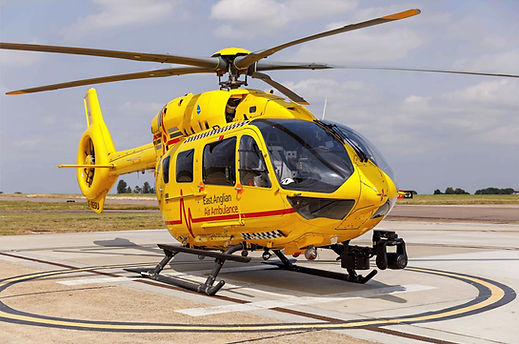
To See What East Anglian Air Ambulance Do Daily Take A Look At Their Latest Incidents Page - HERE

Moments That Stay With You
Luke reflects on the lasting impact of the work in a way that’s both honest and measured. There’s a balance in this role between being fully present and protecting yourself from carrying every weight forever. “There’s an element in this role of self-protection,” he explains. Over ten years, working multiple shifts a week and attending dozens of patients each time, he’s had to learn how to process the sheer scale of what they encounter. “I have to be very careful about how much you protect yourself from,” he says. He’s mindful not to let this protection ever feel like a lack of care. “I never want you to feel like your experience didn’t matter to me… it’s just that I can’t carry it around with me forever because there’s simply too many of them.” For Luke, certain moments stick not because they are dramatic or unusual, but because they are relatable in small, personal ways. “If there’s anything about the interaction with this patient or their family or their environment that makes it immediately relatable to you, that’s much harder to put to one side,” he explains. A tiny detail can make all the difference. The colour of a front door, a child in pyjamas identical to his son’s, or a car like his wife drives — these small connections bring vivid memories of a call that might otherwise fade. “For me, it’s absolutely any tiny detail that makes it instantly relatable… it will be much harder to not take bits of that job away.” At the same time, he’s conscious of the shared humanity of the team. What affects one person may not affect another in the same way, and part of their work is being mindful of that. “The things that affect me won’t affect all of my colleagues… and the things that are affecting them might not affect me. So, it is really important to try and keep that in mind.” But not all memories are heavy. Some are profoundly positive, and Luke highlights the role of East Anglian Air Ambulance’s exceptional aftercare team. They follow up with past patients, families and bystanders, from those who have experienced minor emergencies to those who are bereaved. “We’re incredibly fortunate to meet a lot of people that we’ve looked after some time down the line… it reminds you that you’re often one absolutely tiny part in what is usually quite a significant journey process for people,” he says. Seeing patients years later, hearing how they are doing, and witnessing the small, positive outcomes of care is what sticks with him in a lasting and uplifting way. “You meet people and it might be two or three years since you’ve seen them initially, but actually you get to then catch up with them again, and that is really nice. So that stays with you in a really positive way.” The Power of Teamwork: When Luke talks about teamwork, it’s with a certainty that leaves no room for doubt. “It’s probably the single most important aspect of everything we do,” he says — and he means everything. He’s quick to point out that although the bright orange suits and yellow helicopter are what the public see, they represent only the very tip of an enormous structure. Behind every mission are hundreds of people working quietly, tirelessly, and often invisibly. Teams across the charity handle fundraising, logistics, maintenance, coordination, governance, communications — all the pieces that have to fit perfectly together so that the crew can deliver critical care when it matters most. That wider teamwork, Luke says, is what makes the visible work even possible. Then there’s the operational team: the pilots, the doctor, the critical care paramedic, sometimes joined by a third clinician — usually four or five people working in absolute sync. Aviation and clinical roles may be different, but they rely on each other completely. Luke laughs that he’s learned a fair bit of aviation knowledge over the years, “but I couldn’t fly you anywhere.” Without the skill of the pilots — flying into un-surveyed sites, in difficult weather, in the dark, often with very little warning — the team would never arrive at all. What makes their teamwork unique is its closeness. They don’t work identical shifts, but Luke always rotates among the same handful of colleagues. That consistency builds something rare: deep understanding. They brief together. Train together. Share meals together. Start their day talking honestly about how they’re feeling. That honesty matters. Knowing each other so well creates awareness — the kind that keeps people safe. “If you’re not quite on par today… I’ll probably know why that is,” Luke says. Fatigue, stress, hunger, a tough run of shifts — these things affect performance and acknowledging them means the team can support each other without judgement. In other environments, he explains, you often work with “flash teams” — people who come together temporarily and don’t have the luxury of that depth of familiarity. Replicating the level of trust his team has built would be incredibly difficult, maybe impossible. Sometimes the most powerful moments of teamwork happen in the simplest ways: sitting down over breakfast, talking about the last few days, noticing when someone seems a bit off, and quietly picking up the slack. That kind of awareness can’t be trained into people — it grows through time, connection, and genuine care. “I think our teamwork across the whole organisation is exceptional,” Luke says. And at the sharp end — where split-second decisions and absolute trust can be the difference between life and death — that unity becomes the backbone of everything they do. “It’s probably the single biggest factor in why we’re considered to be quite good at what we do, really.” The Toughest Challenge: When Luke spoke about the hardest part of his role, he didn’t choose a single dramatic moment or a specific mission. Instead, he described something far more human — the emotional balancing act that sits quietly behind every call-out. He explained that, on one hand, there’s a natural instinct to stay clinical. “If you keep it scientific, you remove emotion… and then you don’t have to think about the emotion,” he said. It’s a mindset that helps him stay calm, make fast decisions, and focus on the treatment in front of him. But he also knows that people aren’t just medical problems to be solved. They are frightened, hurting, overwhelmed humans — and they need him to be one too. “If you’re in pain, you don’t just want someone to give you medicine,” he said. “You want someone to put their hand on your shoulder or hold your hand and tell you it’s going to be okay.” That kind of presence matters deeply to him. He wants to treat people like people, not like cases. He wants to offer comfort as well as care. That compassion carries a weight — and that, he admitted, is the real challenge. He works every day to find the balance: to be emotionally present enough to care fully in the moment, but not so open that the weight follows him home long after the shift ends. He never wants anyone to think he doesn’t feel deeply — he does. He just cannot carry every single story forever. “Your bucket would fill up very, very quickly,” he said gently. It’s not detachment. It’s survival — the kind that allows him to keep showing up with empathy, shift after shift, year after year. Looking After Wellbeing: For Luke, looking after the team’s wellbeing isn’t about a single policy or a post-incident debrief — it’s built into the way the crew works every day. “That comes immediately back to that teamwork thing,” he explained. Knowing your colleagues well — understanding what challenges them, what doesn’t, and how they’re feeling — makes it easier to notice when someone might need extra support. “I’ll take care of this part of the job, I’ll go and speak to this person, I’ll go and deal with this problem… and the next time the shoe is on the other foot, they’ll do the same for you.” Because the team is small and close-knit, these connections run deep. Luke emphasized that the relationships formed before a critical incident are far more important than reactive support afterwards. “Lots of time people focus on, well, we just need to debrief people, we need to understand what happened and we need to support people after the thing. Personally, that’s important, but it’s about 10% as important as all the stuff that went before the thing.” He believes in front-loading wellbeing: proactively creating an environment where team members feel safe, have time to learn, and understand each other’s triggers and strengths. “You have to set up an environment that’s safe to learn… that you’ve got time to spend with your colleagues and you’ve got time to understand what things press their buttons and what things they can deal with and can’t deal with,” he said. The East Anglian Air Ambulance also follows broader guidance, like The McQueen Charter, which was created to support mental health across Helicopter Emergency Medical Services. Luke noted that while it’s tailored to emergency aviation, nearly all of its principles — around 99% — are relevant to organisations everywhere. For Luke, looking after wellbeing isn’t a box to tick; it’s a culture, a continuous practice that ensures the team can keep delivering life-saving care without sacrificing themselves in the process.
How the Community Can Support East Anglian Air Ambulance?
When asked how people can support East Anglian Air Ambulance, Luke made one thing clear: there is a place for everyone. “If somebody felt compelled to help, we would have a way that they could help us,” he said. No matter a person’s financial situation, availability, or skill set, there are countless ways to contribute. “There are many ways to get involved and support.” The most obvious route is financial support. The charity receives no regular government funding, meaning the entire service — from the aircraft to the crews to the lifesaving equipment — exists because ordinary people choose to donate. But Luke is deeply aware of the reality many are facing. “Austerity is a thing. Cost of living is incredibly expensive and lots of people don’t have spare money,” he acknowledged. And that’s why the charity’s community network is so important. Beyond donations, people can volunteer at events, help inside the base, or support one of the many activities the charity organises. They also run a community CPR training programme, teaching lifesaving skills to the public. Anyone with CPR knowledge — or even just a willingness to help — can get involved. The website offers clear pathways for people who want to take part, but for Luke, it goes deeper than signing up to volunteer. It’s about recognising that supporters are genuinely part of the organisation. “I 100% would include every single person that either contributes financially or with their time, knowledge or expertise as being part of our team,” he said. “Without those people doing all those amazing things, we wouldn’t do the very small bit that we do right at the front.” For Luke, every person who chooses to support East Anglian Air Ambulance — in any way — becomes part of something extraordinary. Why Air Ambulance Services Matter More Than People Realise: When people haven’t needed an air ambulance, it’s easy for the service to feel distant — something happening above us, somewhere else, for someone else. But Luke believes the public would see things very differently if they understood what the air ambulance truly is, and the role it plays in emergency care. “We’re exceptionally lucky in this country to have an NHS,” he began. The standard of healthcare — especially outside the hospital — is extraordinary. But there are moments when someone is so critically ill or injured that they need more than speed. They need a team who can bring the capabilities of a hospital right to where they are. And that’s where the air ambulance becomes vital. It’s not just about reaching people quickly. It’s about the level of care the team brings with them — advanced skills, specialist equipment, and critical interventions that can make the difference between life and death long before a patient ever reaches a hospital. East Anglian Air Ambulance directly employs both doctors and paramedics, ensuring resilience within the team and continuity of expertise. But Luke is keen to highlight that the air ambulance’s impact goes far beyond flights and trauma scenes. More Than Helicopters - A Wider Mission: There is important work happening behind the scenes that many people never see. One example is the charity’s community CPR training programme. The team knows that if they attend a cardiac arrest today, they’ll provide world-class care — but that’s just one patient. Teaching hundreds of people how to deliver CPR before the emergency services even arrive at the scene? That can save many more lives. “Those early steps in the chain of survival have to be done, and done well,” Luke explained. Empowering adults and children with lifesaving skills is one of the most impactful ways the charity improves out of hospital cardiac arrest survival before the helicopter even lifts. Another crucial but often overlooked area is post-incident aftercare. When the emergency is over, families are often left with questions, shock, and emotional weight that lasts long after the day itself. The charity’s aftercare team helps people weeks or even months later — filling in gaps, answering questions, offering clarity and support at a time when it matters just as much. The Critical Care Cars: Many people assume the air ambulance always arrives by helicopter — but that’s not the full picture. The charity also operates critical care cars, and they’re a core part of the service. Sometimes the fastest way to reach someone isn’t by air, especially in cities or when landing sites are limited. Sometimes weather conditions are outside of legal flying limits. And on the rare occasion the aircraft needs unscheduled maintenance, the team stays fully operational by road. What surprises most people is this: The level of care is identical whether the team arrives by helicopter or car. Same doctors. Same paramedics. Same equipment (with the exception of a stretcher). Same critical capabilities. The only difference is whether there are pilots on board. It's also more common than people realise for the team to reach a patient by helicopter, provide treatment, and then accompany them to the most appropriate hospital for their ongoing treatment and care in a standard ambulance — whatever gets them there safest and fastest. They operate four cars in total, though only two crews are ever active at once. The extra vehicles ensure continuity when shifts change or when one car is already out on a mission. A Service That Reaches Far Beyond Emergencies: For anyone who hasn’t thought much about air ambulance services, Luke’s message is simple:— Take a moment to look at what they do — not just the tasking, but the training, the aftercare, the innovation, and the way they bring hospital-level treatment directly to people when every second counts. It’s a service built entirely on public support, working tirelessly to give critically ill and injured people the best possible chance. And, as Luke put it, they do far more than “just fly around in a helicopter.” Twenty-Five Years of Saving Lives: A 25th anniversary isn’t just a number — and for Luke, it certainly isn’t just a date on the calendar. When he spoke about this milestone, there was a real sense of pride in his voice, not just for the service itself but for everyone who has carried it forward over the last quarter of a century. “I don’t want to sound cheesy,” he said, “but I really believe in this.” If someone he loved ever became critically ill or injured, he would want his own colleagues to be the ones at their side. That’s how strongly he feels about the quality, dedication, and humanity of the team. Reaching 25 years, he explained, represents two things: 1. Twenty-Five Years of Lifesaving Care A quarter of a century of stepping into people’s lives on their hardest days. A quarter of a century of bringing advanced, hospital-level care to the streets, fields, homes, workplaces, and roadside scenes across East Anglia. A quarter of a century of making a difference — often in ways the public will never fully see. 2. Twenty-Five Years as a Remarkably Successful Charity What many people don’t realise is how hard it is to sustain a service of this scale with no regular government funding. To maintain aircraft, vehicles, medical equipment, training, and staffing — year after year, for 25 years — is a massive achievement. It speaks to: •the hard work of everyone behind the scenes, •the dedication of countless volunteers and supporters, •and the loyalty of the East Anglian public, who continue to fund the service because they believe in it. That level of sustained support, Luke said, “reinforces the worth” of what East Anglian Air Ambulance does. It proves that the community doesn’t just appreciate the service — they value it enough to keep it flying for a quarter of a century. This anniversary isn’t just a celebration of the past. It’s a reminder of how many lives have been touched, how many families have been helped, and how much trust the people of East Anglia place in the team every single day.

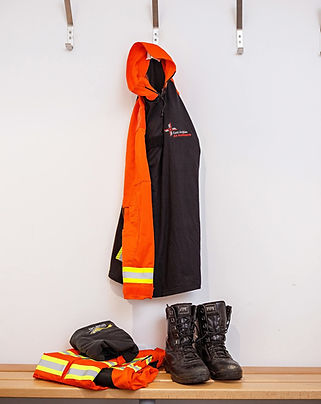
Behind the Flight Suit
When the shift ends and the helicopter powers down, Luke steps back into a different world — one filled with family, normality, and the simple things that keep him grounded. He laughed as he admitted that sometimes, after a long 12-hour shift, the first step in “recharging” is doing absolutely nothing. “Sometimes my recharging involves not moving on the sofa for a little while,” he said. But beyond those quiet moments, his real source of rest and balance comes from home. Luke is a husband and a dad — and his pride in that is unmistakable. His wife, also a paramedic and part of the East Anglian Air Ambulance team, understands the unpredictable nature of the job better than anyone. There’s comfort in that shared experience. If he arrives home two hours late, there’s no confusion, no frustration — just understanding. “She gets it,” he said simply. “She’s been here and done it.” Their five-year-old son, Felix, has grown up around the rhythms of shift work too. Luke described their little daily conversations: “Are you working today?” “Yes.” “What time will you be home?” “Seven.” “Will I see you before bed?” Sometimes the actual answer ends up being no — but Felix accepts it. He already understands, even at five, what it means for his dad to help people. Outside of the flight suit, Luke’s life is full of the everyday joys that keep him centred: family time, rest, good food, and the chaos of keeping up with a little boy obsessed with mountain bikes and motorbikes. But he also reflected on something deeper — the importance of staying whole, rested, and human outside the job so he can give his best inside it. “The things that make you, you… they contribute a lot to the way you are with people and patients,” he said. When his own “battery” is charged, he knows he can give more — compassion, clarity, and care. He loves his work. He’s proud of what he does. But he also recognises that he is more than the orange flight suit — and that’s exactly what keeps him grounded, present, and able to face each new day with empathy. A Favourite Place to Breathe: When Luke thinks about the places that feel most like home, his mind goes straight to the coast — specifically the wide, open stretch of beach at Holkham. He smiled as he described it: vast, empty, and beautifully simple. Not the kind of place he wants on a blazing hot day packed with holidaymakers, but on grey, drizzly mornings when the wind feels sharp and the sand seems endless. “I love people,” he said, “I just don’t always want to be surrounded by people.” Holkham gives him space. Space to think, to decompress, to just exist with his family and the dogs without the noise of the world crowding in. But the water means something else to him too. Luke grew up fishing — “I was obsessed with it,” he admitted — and those hours beside lakes and rivers were his early version of peace. As adulthood took over, fishing slipped quietly into the background… until his son, now five, became fascinated by it. That spark brought Luke back to the water. He loves taking Felix with him, sharing the calm, the focus, the stillness. But he’s also rediscovered something personal — the quiet joy of being outdoors alone, somewhere simple and undemanding. Whether it’s the open beach, a riverbank at dusk, or a quiet lake with nothing but the sound of water, Luke’s favourite places aren’t really about the landscape at all. They are the places where the world slows down and he can just be — a dad, a husband, a man outside the orange flight suit. A Message to Everyone Who Makes This Possible: If there’s one message he could leave with every reader, it’s this: He genuinely believes in what East Anglian Air Ambulance does. Not in a vague, distant sense — but in a personal, grounded, “I would want this service for myself or my own family” kind of way. The service is exceptional, lifesaving, and deeply human. But it only exists because of one thing: teamwork. Not just the teamwork between the small crew who step onto the aircraft each day. Not just the teamwork across the wider charity — the fundraisers, the coordinators, the volunteers, the logistics, the planners. But the teamwork involving every single person in East Anglia (and beyond) who gives something of themselves to make the service possible. An hour of someone’s time. A pound from someone’s pocket. A conversation that spreads awareness. A community event that raises funds. A simple act of care. Big or small — every contribution becomes part of something extraordinary. He believes everyone involved should feel just as proud as he does. Because they are all part of a service that saves lives, supports families, and shows what a community can achieve when people come together for something bigger than themselves. 25 Years of Courage, Compassion, and Community: As East Anglian Air Ambulance marks 25 years of extraordinary service, it’s impossible not to feel the weight of what that milestone represents — countless emergencies, countless families forever changed, countless moments where skill, teamwork, and calm expertise made the difference between life and loss. Behind every flight is a story of human hardship, but also human brilliance. It is a service built on resilience, compassion, and the unwavering determination to show up for people on the worst day of their lives. And at the heart of this feature stands a man who embodies that spirit — humble, steady, deeply human — reminding us that meaningful work doesn’t always look dramatic. Sometimes it’s quiet dedication, long nights, and the choice to keep going, again and again, because someone out there needs you. Twenty-five years on, the mission remains the same: to save lives, to stand strong for this region, and to show that when a community comes together, extraordinary things become the everyday.
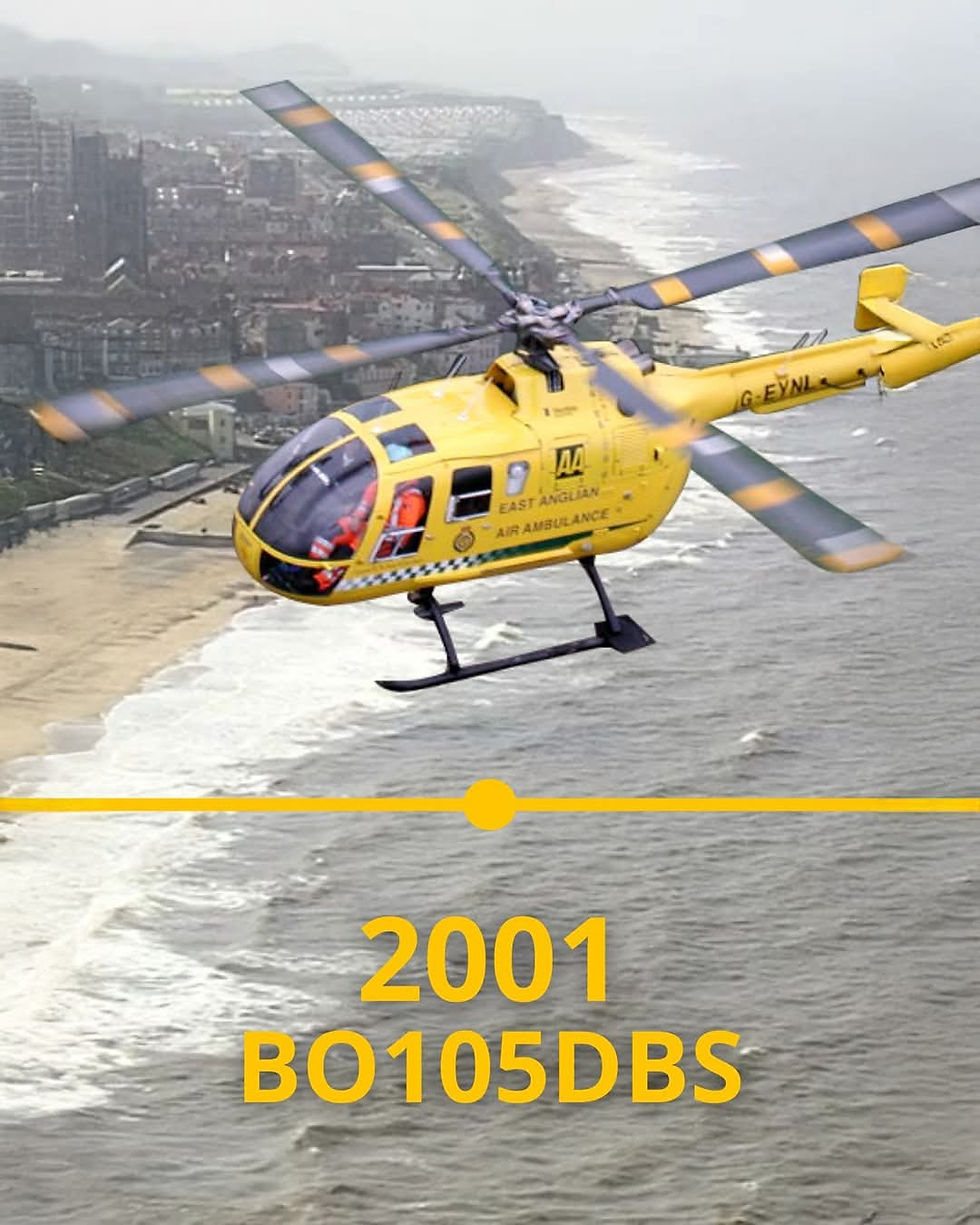
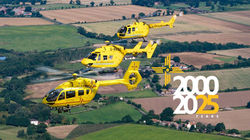
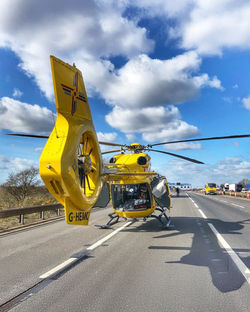
From the year 2000 to today, every aircraft tells a story of progress, dedication, and the countless lives touched along the way. The helicopters may have changed, but the commitment behind them has never wavered.




 |  |  |
|---|---|---|
 |  |  |
 |  |  |
 |
Check Out Full East Anglian Air Ambulance Website By Clicking The Image Below

Follow East Anglian Air Ambulance On Socials


If You'd Like To Make A Donation Or Find Out How You Can Get Involved - Click The Button

All images are courtesy of East Anglian Air Ambulance. Lonely Llama does not own or claim rights to these images.
Meet the Guides Showcasing Great Yarmouth’s Heritage — One Historic Walk at a Time
When we sat down with Becci and Anthony from Great Yarmouth Heritage Walks and Talks, it became instantly clear how much pride they take in sharing the stories of our town. Both have been guiding for around a decade, but it was the way they spoke about their journey that truly highlighted their passion for keeping local history alive. Becci introduced herself first with a warm smile, followed by Anthony, and together they explained how their journey began. Back in 2015, they enrolled on what turned out to be a surprisingly intensive training course. Anthony described it as “quite a lengthy course… it went from about April till July,” filled with lectures from local people and historians who taught them “all the ins and outs about the town.” It wasn’t just listening, either. They had to switch roles and become researchers themselves—producing essays, completing projects, and even running trial walks. Becci reflected on it as “a good start… a good course,” and it was obvious that this strong foundation helped shape them into the guides they are today. After completing the course, both were invited to join the town’s official Heritage Guides, something they still speak about with real appreciation. Since then, their work has taken them not only through the heart of Great Yarmouth but also across the wider borough—Caister, Gorleston, Burgh Castle and beyond. Their mission is simple but powerful: to reveal the layers of history that people often overlook. “People just seem to think it’s a seaside town,” Becci told us. “But look beyond the lights of the seafront and there’s over a thousand years of history here.” It’s a line that perfectly captures their approach—inviting visitors and locals alike to see the town in a completely new light. Anthony added that while some walks include elements of fun or entertainment, the commitment to accuracy always remains. They work hard to ensure everything they share is “as factually correct as we can,” striking that ideal balance between engaging storytelling and meaningful heritage preservation. The Origins and Mission: Becci and Anthony told us how Great Yarmouth Heritage Walks and Talks first came to life, they shared a story that goes right back to the Millennium. Becci told us, “I think it started in 2000 as part of the Millennium Project,” and that set the scene for how the entire movement began. Anthony then filled in the fascinating details. He explained that there was once a hope to establish an official Blue Badge Guide presence here in Great Yarmouth — the same respected guiding organisation found in places like Oxford, Cambridge, and major cities across the country. The idea came from a man named Alan Carr, who had previously worked in Skegness and believed strongly that Great Yarmouth deserved the same recognition. But when he approached the national Blue Badge organisation, he was turned down. According to Anthony, the decision boiled down to one harsh judgement: “Great Yarmouth wasn’t important enough.” It wasn’t seen in the same category as the big historic centres, despite its incredible depth of heritage. Rather than giving up, Alan did something remarkable — he started his own guiding group. He set up the very first version of what would become Great Yarmouth Heritage Walks and Talks. Back then, it was just a small handful of guides, but his determination planted the roots for something far bigger. Over time, the programme evolved, especially once the training course that Becci and Anthony completed was introduced. “It took off from there, really,” Anthony said. And ever since, the group has continued to grow, sometimes swelling in numbers, sometimes working with a tighter team, but always staying committed to the same mission: sharing Great Yarmouth’s rich and overlooked history. It’s a story of perseverance, local pride, and refusing to let Great Yarmouth be underestimated — and it all started because someone believed this town was important enough. When we asked about the original mission behind Great Yarmouth Heritage Walks and Talks, Becci brought us back to the vision that started it all. She explained that Alan Carr’s goal was simple but powerful: to share the true historical heart of Great Yarmouth. As she put it, “I think Alan Carr wanted to get the historical side of Great Yarmouth across… to showcase the history and the heritage of the town.” His mission was never just about leading people on a walk — it was about shifting perceptions. He wanted visitors and locals alike to see beyond the arcades and summer crowds, to realise that Great Yarmouth had always been so much more than a seaside destination. Becci told us, “It wasn’t just this holiday destination — it had something extra to give.” And that “something extra” reaches back centuries. The town’s story stretches all the way to the 1200s, bursting with maritime history, industry, culture, community, and change. Anthony summed it up beautifully: the aim was “to show people, to sell the town a little bit, expose really what the history was.” He described Great Yarmouth’s heritage as “absolutely fantastic… really quite amazing,” and hearing the admiration in his voice, it was clear he meant every word. From Humble Beginnings to a Thriving Heritage Experience: When we asked how Great Yarmouth Heritage Walks and Talks has evolved over the years, Becci and Anthony laughed slightly — because so much has changed, both in the town itself and within their guiding team. Anthony began by explaining that, in the early days, the group looked very different. Their original course brought in around 15 or 16 trainees, though not everyone continued. Over time, the team shrank dramatically. “Not many years ago, we dropped to about five people,” he told us, and with around 70 walks to cover each season, that created some real pressure. Thankfully, they were able to recruit new guides, bringing the workload back into balance. Today, each guide typically leads around ten walks per season. Becci reflected on how the walks themselves have transformed. “When we first started, we had set walks and we didn’t deviate from them for years,” she said. It was a small, structured offering — just three or four routes. But everything shifted when a new wave of trainees joined the team. With fresh perspectives came new ideas, and they began to redesign, expand, and reimagine their programme. Now, the variety is far greater. “We offer between eight and ten different walks per season,” Becci explained, covering the period from April to October. And in the past year, they’ve added something completely new: winter talks. These sessions have already proven incredibly popular, extending the spirit of the walks beyond the warmer months. Despite all the changes, the heart of the group remains the same. “We’re all very passionate about the town… but we all bring something different to the table,” Becci told us, highlighting the blend of personal interests and specialist knowledge that enrich each walk. Technology has also played a big role in modernising the experience. Anthony explained that they’ve introduced an online booking system, something that has made life much smoother. In the past, people would simply turn up on the day — which meant guides never knew whether they’d have a full group or no one at all. The new system brings clarity and safety, eliminating the need to handle cash and helping them prepare properly. They also credit much of their recent progress to fellow guide Ruth Cockrill, whose background in marketing has helped elevate their presence online. Anthony told us that during the pandemic, Ruth was instrumental in keeping the walks alive by encouraging the guides to record short “virtual walks.” These 10–15 minute cameos were posted on Facebook, allowing people to enjoy snippets of history from home. “We kept the ball rolling in the tough times… otherwise we could have easily just faded away,” he said. Becci added that another major shift over the last decade has been the surge in private bookings. “When we started, it was very rare to get a private booking,” she said. Now, they are almost equal to their public walk schedule. Clubs, groups, and organisations even book a year in advance — some returning again and again. Step Into Great Yarmouth’s History: When and Where to Join: Getting involved couldn’t be easier, as Becci explained, with all the details available online and locally. Their full programme is available online, where guests can browse all upcoming walks and talks throughout the season. “We are online… and that will give you a list of all the walks and talks that we do throughout the season,” she told us. They also run an active Facebook page under Great Yarmouth Guided Heritage Walks and Talks, where updates, photos, and reminders are posted regularly. For those who prefer something tangible, the team also provides leaflets around the town. And if you happen to be passing through the centre, Great Yarmouth Town Hall keeps an up-to-date list of all the walks and booking details, making it easy for anyone to discover what’s coming up next. Booking a walk is straightforward thanks to their improved online system. “You just have to register and then go through the list of dates and what walks you want,” Becci explained. Everything you need — from walk descriptions to schedules — is listed both on their website and on Facebook. Making History Fun: Walks and Talks for the Whole Family: For children and families, the walks are a chance to explore history in a hands-on way — and Becci and Anthony were clearly excited to tell us how. Becci explained that in recent years, the group has embraced technology to make their walks more interactive for younger audiences. One of their most popular family experiences is Seaside Adventures into the Past, a guided walk that uses an app called Action Bound. “It’s a scavenger hunt type app,” she told us, where families watch short videos, answer questions, and complete fun tasks as they explore the town. They also run another family favourite: Yucky Yarns, a brilliantly playful walk aimed at primary school children. Led by the character Jemima or Jeremy Black, the “custodian of Yucky Yarns,” kids are taken through some of Great Yarmouth’s more gruesome, fascinating, and funny historical moments. From plague and punishment to ghost stories and local legends, it’s a walk that mixes education, imagination, and just the right amount of “eww!” Anthony added that although these walks are designed for children, they often end up captivating the grown-ups too. “You sort of have to sell them to the parents,” he said with a smile, “but they’re largely targeted for children to get them interested in local history.” And the kids take to it quickly — especially when the technology comes out. One of their guides has even used AI to create digital versions of historical characters who “talk” to families through the app. Players score points, compete, and move through the walk like a historical treasure hunt. Becci explained that Yucky Yarns actually grew from an adult-only walk called Gory Stories. Because some of the original content wasn’t suitable for children, they created a lighter, age-appropriate version — complete with sensory surprises. One of the favourites is the “smelly cubes,” little containers that recreate scents from the past, including a whiff of “Victorian street life.” Unsurprisingly, the kids love it. And, as Becci admitted, “Nine times out of ten, the kids enjoy it… but the adults enjoy it more!” The family-focused walks have become an important part of what the heritage team offers. Not only do they encourage children to engage with local history, but they also bring families together through shared adventure, laughter, and curiosity. And even on their regular walks, families are welcome. As Anthony told us, it’s not unusual to see three generations walking side by side. “Oddly enough, we get quite a good number of local people learning about their own town,” he said. Some lifelong residents — people who’ve lived here “60 or 70 years” — still find themselves surprised by what they learn. The Journey So Far: Bringing Great Yarmouth’s History to Life: Anthony reflected on the journey and success of Great Yarmouth Heritage Walks and Talks, explaining how the programme has grown and evolved each year. The team meets annually to review what worked and what could be improved, paying attention even to small details like timing or the day of a walk — factors that can make all the difference in attendance. “Sometimes we’ll rewrite a walk, tweak it a little just to make it more interesting,” he explained, “and occasionally we’ll generate a new one as well.” This approach ensures that each season feels fresh, dynamic, and engaging for both first-time visitors and returning guests. It’s clear that their success hasn’t just come from sharing history, but from being willing to adapt, refine, and continually respond to what participants enjoy. The result is a programme that feels alive, welcoming, and full of discoveries for everyone who joins. The People Bringing Great Yarmouth’s History to Life: We were curious whether the walks and talks were a one- or two-person operation, and it quickly became clear that this is very much a team effort. “At the helm is Ruth Cockrill,” who Anthony and Becci both described as “the wizard behind the curtain.” She organises everything, from schedules to bookings, and is credited with keeping the whole programme running smoothly. Around Ruth, there’s a team of seven guides, each bringing something different to the table. Becci and Anthony explained that the guides have a variety of specialties, which keeps the programme fresh and varied. “Some have their preferences,” Becci said. Anthony’s favourite is the Minster graveyard walk, where visitors explore tombstones and burial plots while hearing the fascinating stories of the people buried there — some going back centuries. Becci, on the other hand, loves leading Gory Stories, a more spine-chilling, history-rich walk that captivates adults and older teens alike. Another guide, Matthew, has developed a walk focused entirely on Great Yarmouth’s entertainment history along the seafront. As Becci explained, “His knowledge is just amazing,” and Anthony added that it goes beyond mere nostalgia. While visitors may enjoy reminiscing about television stars like Morecambe and Wise, the walk also dives deep into the town’s rich music hall heritage, exploring legendary performers such as Lily Langtree and other early entertainers whose stories are rarely told. With such a varied and passionate team, the Heritage Walks and Talks are able to offer something for everyone — whether you’re fascinated by chilling tales, curious about local celebrities, or simply looking to explore the town’s centuries of history. It’s this mix of expertise, personality, and passion that makes the programme feel both personal and professional, welcoming newcomers while keeping long-time visitors coming back for more. Supporting the People and Projects That Bring History Alive: Becci and Anthony were eager to shine a light on the local people, groups, and businesses that make Great Yarmouth’s heritage so vibrant. Anthony kicked things off by highlighting some of the town’s hidden gems. “Time and Tide is an absolutely fantastic museum,” he said. “And the Tolhouse, though tiny, is equally fascinating.” He also pointed out Lydia Eva, the last steam drifter in the world, run by a charitable trust. Visitors can enjoy a walk round on the historic boat for free, with donations welcomed. Anthony explained, “You think it’ll be a 10-minute visit, and two hours later you’re still discovering things — it’s fascinating.” The boat even made a cameo in the recent film Wonka, where it was decorated for the scenes and brought a bit of cinematic history to the town. Becci added that several local heritage groups are also doing amazing work. “The Great Yarmouth Civic Society is all about instilling pride in the town,” she said, “and the Archaeological Society runs a wonderful programme of talks every year, covering not just Great Yarmouth but the surrounding area too.” She also gave a special mention to the Reprezent Project, whose murals and mosaics bring history to life across the town — something we at Lonely Llama wholeheartedly agree is fantastic work and fully support all the incredible things they are doing to celebrate history and art in such a vibrant, community-focused way. Anthony highlighted another way the town is celebrating art and heritage: a new art trail. “This year, a dozen works have been placed in strategic locations around town,” he said. “Some are by particularly well-known artists, and each one tells a story about Great Yarmouth’s history.” Together, their shout-outs show just how vibrant the local heritage scene is — from museums and historic boats to societies, public art, and community projects — all working to make Great Yarmouth’s past come alive for everyone. Life Beyond the Walks - How the Guides Recharge: Curious about how Becci and Anthony switch off when they’re not guiding, we found their answers were as varied as they were insightful. Becci shared that she enjoys immersing herself in stories, both through reading and listening. “I listen to podcasts, mainly autobiographical or history-based ones,” she told us. Her love of history naturally extends beyond her work, and podcasts give her a chance to explore it at her own pace. She also values social time with friends. “Being with friends who you can just offload to is a great way of getting everything off your chest,” she said. For her, relaxing isn’t just about quiet hobbies — it’s also about connection and conversation. Anthony’s approach to switching off is quite different, reflecting a life rich with varied experiences. Retired now, he explained that after years as an engineer — designing and building machinery — and contributing to community projects such as chairing governors at his local high school and helping to organise the town’s music festival, he wanted something purely for himself. That’s when he discovered the heritage course that launched his journey into Great Yarmouth history. “I gradually got deeper and deeper into local history, and I find it absolutely fascinating,” he said. Despite being a Yorkshireman by birth, he has grown to love exploring Norfolk and Great Yarmouth’s past. A Warm Invitation to Explore Great Yarmouth’s History: We asked Becci and Anthony what advice they’d give to someone visiting a walk or talk for the first time. Becci was enthusiastic: “Come along on one of our walks or even one of our talks,” she said. She pointed out that the walks start up again in April, but even at the end of the season, groups or local interest clubs can book private sessions. “You will learn so many interesting things that you might not know before,” she added, highlighting the wealth of history that awaits every visitor. Whether it’s your first time or your fifth, the walks and talks are welcoming, engaging, and carefully designed so that everyone can enjoy Great Yarmouth’s fascinating history. Whether you’re a local curious about your own backyard, a family looking for an engaging day out, or a visitor keen to uncover stories beyond the seafront, Great Yarmouth Heritage Walks and Talks offer something truly special. With passionate guides, fascinating tales that span centuries, and experiences that bring history to life in creative, interactive ways, every walk is an invitation to see the town with fresh eyes. From chilling tales in graveyards to AI-generated characters, from hidden museums to vibrant art trails, there’s always something new to discover. We left the conversation with Becci and Anthony inspired, knowing that Great Yarmouth’s history isn’t just in the past — it’s alive, accessible, and waiting for you to explore. Come along and experience it for yourself — you might just see the town in a whole new way.


Take a stroll through our gallery of photos from Great Yarmouth’s Heritage Walks and Talks — you might even spot a few familiar places. But look closely… could they be hiding stories you’ve never heard before?
There’s only one way to find out: join a Great Yarmouth Heritage Walk & Talk and uncover the secrets woven into the streets of this incredible town.
Follow Great Yarmouth Heritage Walks and Talks On Socials or Check Out Their Website. Just Click The Icons To find Out More:


Jody MacMillan — empowering calm, confidence, and change, one session at a time.
When you meet Jody MacMillan, there’s an instant sense of warmth and realness about her. The founder of Jody MacMillan Hypnotherapy describes herself with a smile as “owner, founder, therapist, administrator — all rolled into one.” At 40 years old, she has been happily married for nearly a decade and is a proud mum to a seven-year-old daughter. But Jody’s path to becoming a hypnotherapist wasn’t a straight one. For two decades, she thrived in the corporate world — working across the UK and Ireland in business development and sales. “It was great, brilliant,” she recalls, “but it didn’t quite work with a child as well as it did before. I was travelling everywhere, and eventually, I didn’t even know what day of the week it was. I was burnt out — firmly on the Burnout Express.” As her mental health began to decline, Jody found herself checking off the familiar symptoms of stress and low mood. She decided it was time to seek help — but not through the usual medical route. “There’s nothing wrong with medication; it works for many people,” she explains, “but it wasn’t the path I wanted to take.” That’s when she discovered hypnotherapy. Like many people, her initial perception was shaped by TV shows and stage acts. “I thought it was all chicken clucking and pocket watches — 3, 2, 1, and you’re under!” she laughs. “But I soon realised it was nothing like that at all.” After trying hypnotherapy herself and experiencing its benefits first-hand, Jody became fascinated by how it worked and supported people. She began researching, determined to do things properly in an industry she knew could be unregulated. “I wanted to be officially qualified with a recognised qualification.” Jody trained face-to-face with a national school, earning both a Diploma and Higher Diploma in Hypnotherapy, before gradually reducing her corporate hours and stepping into a new chapter of her life. Her original plan was to launch in 2026, but true to her proactive nature, she accelerated everything. “So, I decided to launch in 2025 — my 40th birthday year — and go all in.” Now, having fully left employment, Jody says self-employment has given her the balance and fulfilment she was missing. “It’s not really a job — you meet amazing people and walk alongside them on their journeys.” And for Jody, that personal connection is what drives her. She understands how daunting it can be for people to reach out, especially with preconceptions about what hypnotherapy involves. “It’s about breaking down the barriers and making it accessible to everyone — mums, dads, children — anyone over the age of eight.” What shines through most is her genuine desire to help. “I haven’t been through everything,” she says, “but I understand where people are coming from. That’s what makes this work so rewarding — for both of us.” Finding Purpose Through Helping Others: For Jody, the inspiration to start her business came directly from her own experience. After seeing the difference hypnotherapy made in her life, she felt she could help others in the same way. “I was inspired by how it helped me,” she says, “and I wanted to help others in a way that’s accessible for most people — it’s a natural, person-centred process built on trust and rapport.” When Jody talks about hypnotherapy, she speaks with a mix of passion and humility — the kind that comes from lived experience. But setting up a business from scratch brought its own challenges. “There’s a whole world of confidence issues that come with setting up your own business — that voice that says, ‘Can I do this? Can I really make it work?’” she admits. “It’s about reframing those negatives, thinking positively and moving forward with belief in yourself.” Behind the calm professionalism is a strong network of support and structure that Jody values deeply. “Any good hypnotherapist must have a supervisor,” she explains. “Even once you’re qualified, you continue that supervision for as long as you’re practising.” It’s a process that ensures not just accountability but continuous growth — a principle Jody applies both professionally and personally. “My supervisor has supervision too,” she adds with a smile. “It’s ongoing for everyone — so that no matter how things evolve or change, we’re always giving our best to the people we work with.” From Helping Loved Ones to Changing Lives: When Jody first began her journey into hypnotherapy, there was no grand plan or business blueprint. “It was never meant to be anything bigger than supporting the people around me,” she says honestly. “The idea was just to reduce my hours in my other job and help family and friends.” But as her training progressed, something began to shift. “The more the training went on, the more I enjoyed it. I started to think, actually, I can make something more out of this.” As part of her qualification, Jody was required to work with real people — initially friends of friends or acquaintances as a student. That step outside her inner circle was a turning point. “It made it easier to work with people I didn’t know as well,” she explains. “And the more I worked with them, the more I loved it. Seeing people overcome fears, phobias, and anxiety — helping them function better in everyday life — it’s amazing.” Each person she worked with as a student reinforced Jody’s belief in the power of what she was doing. To share her work more openly, she decided to launch on social media — a small step that quickly gathered momentum. “It just picked up from there,” she smiles. “By explaining what I do in a way people could relate to, it helped bust some of the myths around therapy.” What began as a quiet effort to help those closest to her soon blossomed into a full-time calling. “It started with family and friends — though I always say don’t work with family and friends!” she laughs. “But it’s funny how things work out. Sometimes the smallest intentions lead to the biggest changes.” Growing Beyond Expectations: What began as a simple way to help family and friends soon started to take on a life of its own. “The plan was always to keep it part-time alongside my other job,” Jody explains. “If I could just help a few people I knew, that was enough — it gave me the satisfaction I was looking for.” But the results spoke for themselves. One person would tell another, and then another, and soon Jody realised her little project had far greater potential. “It started to spiral,” she says with a smile. “I’d work with someone as a student or once I qualified, and they’d tell someone else. Before long, it was like — actually, this could be something bigger than I ever expected.” Setting up her social media pages became a turning point. At first, it was simply a place to share what she was doing, but it quickly became a powerful tool for growth. “I started to learn more about social media — posting educational posts, engaging with people in a real and authentic way,” she recalls. “I put myself through a course and learned how to do things properly.” Bit by bit, Jody’s passion evolved into a genuine small business. “Since February, it’s just grown,” she says proudly. “I work a mixture of days and evenings to fit around my family life, and it means I can still see the people who need me — at the times that work best for them.” Her story is one of quiet persistence — a reminder that the most meaningful businesses often grow not from ambition alone, but from authenticity, compassion, and the desire to make a difference. Reaching People Near and Far: What began as a local venture has quietly expanded far beyond Jody’s home in the UK. “I work locally, face to face, in Norfolk,” she explains, “but I also work online — so I now have clients all over the UK and various countries around the world.” Her calm and reassuring presence transcends distance, drawing people to her from across the globe. Closer to home, Jody continues to welcome clients in person, but she’s found that many prefer the flexibility of online sessions. “It’s just as effective online as it is face to face,” she notes. “Some people even prefer it, because after a session you’re relaxed — you don’t necessarily want to get in the car and drive home. You can stay in that calm state for as long as you need, in your own space.” Whether it’s through a screen or in her own peaceful setting, Jody’s focus remains the same — creating a safe, welcoming environment where people can truly unwind and begin to step into the best version of themselves. “It works just as effectively wherever you are,” she adds — a reminder that connection and comfort aren’t defined by distance, but by understanding and care. Finding Jody — and Joining the Journey: For those who want to connect with Jody or explore what she offers, she’s made herself easy to find. “I’m on Instagram, Facebook, and now working on a new and improved website, which is really exciting — I am generally found on social media,” she laughs. “I do quite a lot on there.” Her online presence, under Jody Macmillan Hypnotherapy, brings together everything she’s built so far — a blend of friendly posts, testimonials, useful insights, and a genuine connection with the people who follow her. Though she’s already active online, Jody’s vision continues to expand. “I’m looking at adding other avenues to reach more people,” she says, hinting at what’s to come. What started as a small venture for friends and family has now become a growing platform built on understanding, accessibility, and care. “I know the vision I want now — to help as many people as possible and to make hypnotherapy accessible.” Each step forward feels like a natural progression — guided not by business ambition, but by Jody’s genuine desire to reach the people who need her most, in whatever way works best for them. How It All Works: If there’s one question Jody hears the most, it’s how hypnotherapy actually works. “It’s the million-dollar question,” she says with a knowing smile. People who reach out are offered a free consultation — a gentle first step that allows both sides to get to know one another. “That’s where you find out a bit about me, how I work, and what hypnotherapy really involves — and there is no obligation to move forward into the session,” she explains. Jody specialises in solution-focused hypnotherapy, a modern and empowering approach that looks ahead rather than back. “I’m not a regression hypnotherapist — I don’t take people back to past trauma,” she says thoughtfully. “My belief is that we can’t change the past. What matters is how we move forward from where we are now, and how we shape a more positive, future-focused mindset.” Her sessions are designed to help clients reframe challenges, reduce anxiety, and build confidence — all while giving them practical tools to use beyond the session itself. “It’s about working with what we have and finding ways to move forward,” she explains. “That’s where real change begins.” For Jody, every consultation isn’t just an introduction — it’s the start of a partnership built on trust, empathy, and the shared goal of helping people rediscover calm and confidence in their everyday lives. Helping Individuals, Children, and Families: Jody’s approach is inclusive, welcoming most people aged eight and over. “There are a few people I’m unable to work with on medical grounds,” she explains, “but we cover that in the consultation — just to make sure it’s right for them and right for me. The consultation might sound official, but it’s really just a chat where we get to know each other and look at the journey we could go on together.” Children are a significant part of her practice. “A lot of my sessions with children are around confidence, self-esteem, and nerves — exams, social situations.” While Jody doesn’t run traditional family sessions, she often works with multiple members individually. “Sometimes I’ll see a parent first, then their child,” she explains. “It’s about hearing from everyone and understanding how patterns of anxiety or fear can pass from one generation to the next. A parent’s fear of failure or phobia can sometimes transfer to a child, so working with the parent first can really help the whole family.” Her careful, considered approach ensures that each session is tailored, supportive, and sensitive to everyone involved. “We work together in a safe environment — mum or dad might start first, and then the children come along. It’s all about creating calm, confidence, and understanding for everyone, while supporting the wider family where needed.” A Journey Beyond Expectations: Looking back, Jody describes her journey so far as everything she’s wanted it to be. “Now I’m in it — it’s not exactly where I envisioned it going so quickly,” she admits, “but it’s been fun, unexpected, and full of growth and learning. I wasn’t even meant to launch until next year, with the whole ‘New Year, New You’ thing, but I’m already much further forward than I imagined.” She attributes much of her early success to the people she works with. “That’s testament to my clients — they show up, take part, and we work together. There’s nothing more powerful than seeing someone go through their sessions and get the results they want at the end. That’s what matters — people’s progress, confidence, their wellbeing.” Her journey is a reminder that success isn’t just about speed or scale — it’s about connection, dedication, and the difference you can make in people’s lives along the way. One-Woman Powerhouse — With a Little Help When it comes to delivering hypnotherapy, Jody is very much a one-woman powerhouse. “It’s me who works with the clients from beginning to end,” she says, “but part of the team would be my husband and my daughter. Everyone’s been involved at some point — checking videos, social posts, and giving their opinion on a post.” Her family’s support has been invaluable. “My husband especially — giving me the confidence to do this, even when it’s been daunting.” Despite running her business solo, Jody emphasizes that she’s never truly alone. “One-woman band, if that’s the term,” she laughs, “but it takes a village, as they say. The village is there behind me.” This balance of independence and support is part of what makes Jody’s practice so personal — and so effective. Giving Back and Showing Gratitude: Community and support have always been central to Jody’s journey. “There are so many people who have supported me — local businesses, individuals, and those online who’ve shared and liked posts,” she says. But for Jody, support isn’t about a single person or entity. “Really, it’s all the individuals I’ve worked with, the clients who leave testimonials, the people who like and share — everyone has been so supportive,” she says warmly. “I’m just so grateful for everyone who’s helped me along the way.” Her gratitude shines through — a reminder that her journey hasn’t been solitary, and that every connection, no matter how small, has contributed to the thriving practice she runs today. Finding Balance Beyond Work: Even someone as dedicated as Jody knows the importance of switching off and recharging. For her, that comes in the kitchen. “I like to cook,” she laughs. “I’m one of those people who can make an amazing dish without following a recipe — just put it all in and it tastes incredible. But don’t ask me to make it again! As it will never be the same… maybe I should start to use the pile of recipe books that are piling up!” It’s clear that Jody’s dedication, combined with her family’s support and these small moments of self-care, has helped her reach a point where she’s exactly where she wants to be. “I wouldn’t have done it this quickly without the support of everyone else,” she admits — a reminder that behind every strong professional is a network of love, encouragement, and small wins. A Friendly Invitation to Take the First Step: If you’ve never experienced hypnotherapy before, Jody’s advice is simple — and comforting: just take the first step. “It’s the hardest one,” she says with a reassuring smile. Jody wants people to know she’s approachable and relatable. “I’ve been through things myself, so it’s not a case of sitting in a glass house. This process has helped me, and now I want to help others. There is no judgement, and everything is 100% confidential.” The first step is easy and flexible. “You can send a message, have a consultation, or even just have a call first — however you feel comfortable,” she explains. “No one has anything to lose. You find out about how everything works, I find out about you, and then we see how we can work together.” Her advice is straightforward and heartfelt: “Send the message and have a consultation — there’s nothing to lose, and it could be the start of something life-changing.” With dedication, heart, and a passion for helping others, Jody Macmillan has turned hypnotherapy into a journey of transformation for every client she meets. From small beginnings with friends and family to helping clients across the globe, her mission is simple: empower and support people to move forward. The first step may be the hardest — but it’s also the most rewarding.
“If you’ve ever wondered what hypnotherapy is really like, Jody makes it approachable, empowering, and all about helping you move forward at your own pace.”


Follow Jody Macmillan Hypnotherapy On Socials or Check Out Their Website:


